

How should a cannabis business handle regulatory compliance?
Treat compliance as a year-round program, not a scramble before each inspection or renewal. Compliance Buds gives you an outsourced Chief Compliance Officer and an annual plan: a baseline compliance audit, ongoing staff training, a risk assessment, mock regulatory inspections and a review of training and social impact commitments. Gaps are found and fixed before a regulator finds them.
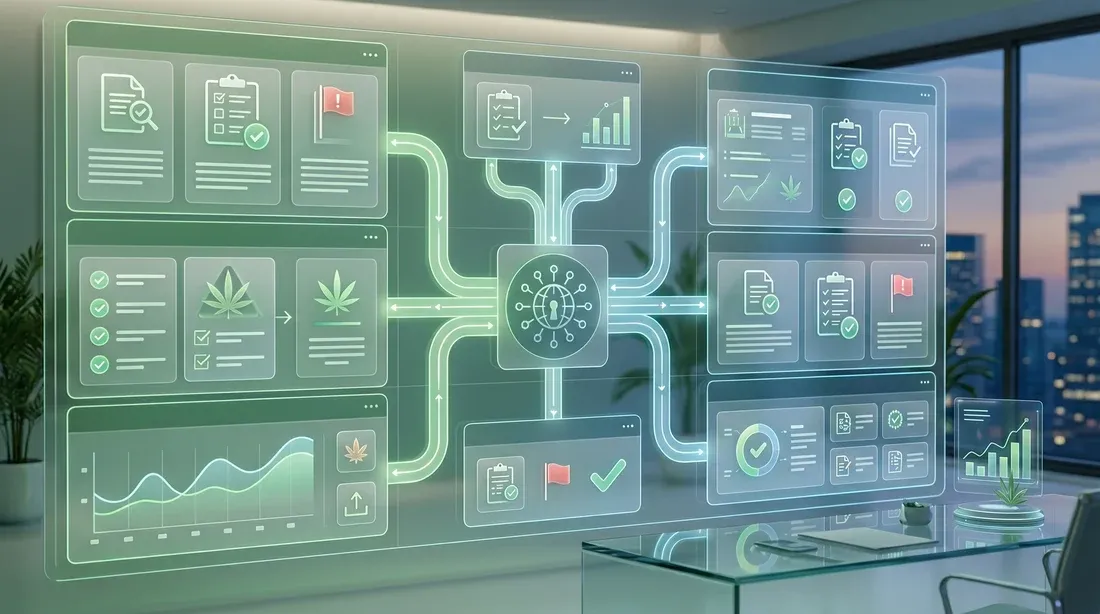
Cannabis compliance means keeping up with state licensing, seed-to-sale tracking and regulations that keep changing, such as New York’s MRTA, in every state where you operate. We take on that work as your outsourced compliance function so your team can run the business.
The compliance challenges cannabis operators face
- License applications rejected for incomplete documentation or compliance gaps.
- Seed-to-sale systems (METRC, BioTrack) producing reporting errors.
- State-specific regulations that require constant monitoring and adjustment.
- Multi-jurisdiction compliance that adds complexity as operators expand.
- License renewals put at risk by past compliance problems.
How we work: your compliance plan
Every plan is built around your licenses, states and starting point. The phases below are the framework; how long each takes depends on where you begin.
Baseline compliance review
We review your licensing status, written policies and SOPs, and regulatory standing in every jurisdiction where you operate. We check whether you meet your license obligations, including operational reporting, seed-to-sale discipline, training records, security protocols and financial reporting to the state. Staff conversations show where daily practice differs from written policy.
Risk assessment and priorities
We identify the specific ways you could fail an inspection or lose licensing standing, and rate each by likelihood and severity. Typical areas are daily operations, inventory tracking, state financial reporting, employment rules, and physical security around cash and product. The result sets the order of work.
Remediation and policy updates
We close the gaps the review and risk assessment found: updated SOPs, corrected tracking records, documentation regulators expect to see, and security improvements coordinated with Security Buds.
Staff training
Compliance is carried out by frontline staff, so training is ongoing rather than a one-time event. We train staff on the updated policies, measure whether practice changes, and refresh the material as rules change.
Ongoing monitoring and inspection readiness
We keep a compliance calendar for reporting deadlines and renewals, monitor rule changes in each of your states, run mock inspections the way your regulator would, and keep social impact and other license commitments current so renewals are not at risk.
Seed-to-sale and accounting integration
We connect your seed-to-sale system (METRC, BioTrack and others) to your accounting so inventory value in your books matches what you report to the state. That alignment supports state reporting, your tax return and your inventory method under federal tax rules.
Who it’s for
Licensed cultivators, processors, dispensaries and multi-state operators across the country, plus applicants preparing for a license, who need senior compliance leadership without a full-time Chief Compliance Officer.
Frequently asked questions
What is Compliance Buds?
Compliance Buds is our cannabis compliance practice. We act as your Chief Compliance Officer and run a structured annual plan that covers licensing obligations, seed-to-sale accuracy, staff training, security, risk and regulator readiness. The goal is a compliance program that runs all year instead of reacting to inspections and renewals.
How does the outsourced Chief Compliance Officer model work?
You get CCO-level oversight as a managed service instead of a full-time hire. Your CCO owns the annual compliance plan, oversees the work in each phase, acts as a point of contact for regulatory questions, and reports on compliance to management, investors, lenders or your board. In the New York and New Jersey area we can work on site or virtually; elsewhere we work virtually.
What are mock regulatory inspections, and why run them?
A mock inspection simulates the inspection your state regulator would run for your license type. We review documentation, walk the premises, test seed-to-sale accuracy, check training records and security systems, and review reports filed with the state. Regulators can impose fines, suspensions or revocation for problems an operator could have caught, so we find them first.
Why does cannabis compliance need cannabis specialists?
Because cannabis compliance sits where state licensing, federal tax rules, banking restrictions, cash-heavy operations and fast-changing state regulations meet. A program that fixes one of those without seeing the others can create new exposure. Our compliance work runs alongside our tax, accounting, security and HR teams, so those connections are handled together.
How do you work with state cannabis regulators?
The way you prefer. Some clients want our CCO to be the named point of contact with the regulator; others keep that relationship and use us to prepare submissions, answer information requests and guide their communications. Either way, we bring practical experience of how state regulators work, including expectations that are not always written down.
How do you handle license renewals?
The annual plan is built so you reach each renewal with documentation, training records, social impact updates and financial reporting already in order. If your renewal is close and you have no ongoing program, we can scope a focused engagement: review your position against renewal requirements, fix the gaps, prepare the submission and support you through regulator follow-up.
How do you support multi-state operators?
With a compliance track for each state where you hold licenses, coordinated under one CCO relationship, so you have one point of contact. Each phase of the annual plan is adapted to that state's requirements, and mock inspections follow each state's inspection style. Our tax and accounting teams coordinate where state tax and state compliance interact.
Do you work with pre-license applicants?
Yes. We review application requirements against your readiness, develop the operating and compliance policies the application will be judged on, help prepare the narrative responses, and coach you for any interviews or presentations. In competitive-license states that preparation can affect your score; in other states it affects how quickly you are approved and how many follow-up questions you get.
How do you handle cash controls?
As part of the compliance program. We document cash handling procedures, separate cash custody from cash recording, require daily reconciliation, and set the documentation that supports both state reporting and your federal return. Security Buds covers physical security for cash on site, and Accounting Buds covers how cash is recorded in the books.
How do you support seed-to-sale tracking?
Through every phase of the plan. We test tracking accuracy in the baseline audit, build tracking discipline into staff training, assess tracking risk, and examine tracking records in mock inspections. If your system, such as METRC, has built up discrepancies, we can reconcile it to physical inventory before a state review finds them.
How is Compliance Buds priced?
We scope the managed annual plan on your size, number of licenses, number of states and the state of your current program. Operators starting from a weaker baseline usually need more work in the first year, with a lighter steady state after that. Single projects, such as license renewal or pre-license support, are priced separately.
How do I start a Compliance Buds engagement?
With a scoping conversation about your licenses, the pressures behind the call, your current compliance program and your timeline. Our proposal names your CCO and sets out the work, the deliverable schedule and the fee. If something is time-sensitive, such as an approaching renewal or a regulator inquiry, we start on that first and finish scoping in parallel.