

What should a cannabis security plan include?
A cannabis security plan documents your facility's security zones, surveillance, access control, alarms, cash and inventory security, personnel policies, visitor procedures, emergency response and record retention. Most states require one for licensing. We write plans that meet your state's requirements and also work as a practical guide for daily operations.
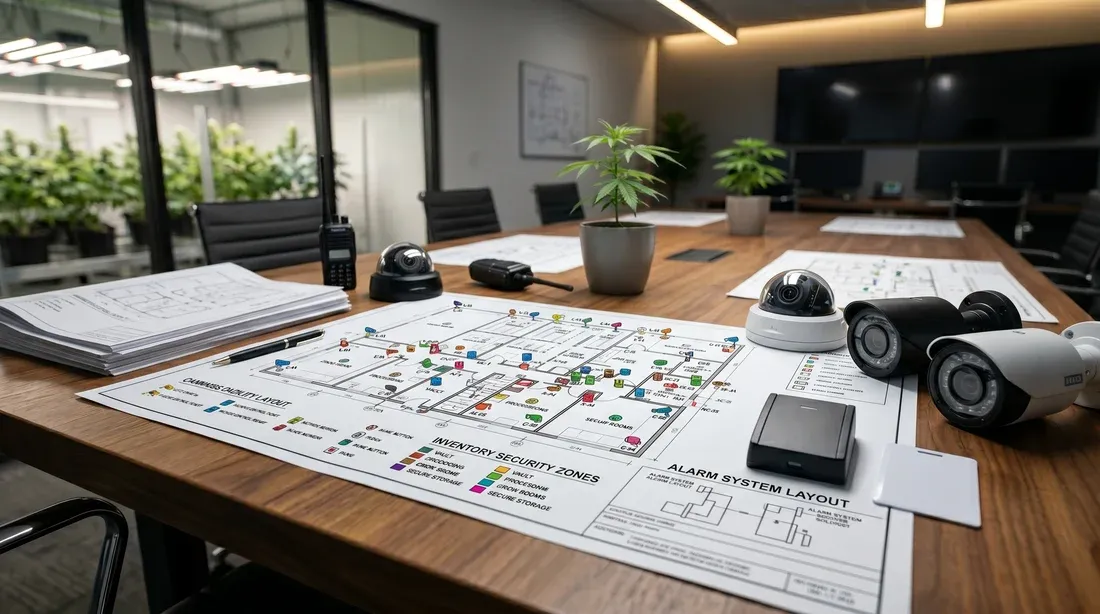
Security plans show regulators that your facility meets security requirements. A well-written plan also serves as the operating guide for your security program, so it should describe what your team actually does.
What a security plan covers
- Facility layout and security zone designations
- Video surveillance specifications and coverage maps
- Access control systems and badge protocols
- Alarm system design and monitoring procedures
- Cash handling and transportation security
- Inventory security and diversion prevention
- Personnel security policies and training requirements
- Visitor management and logging procedures
- Emergency response and incident protocols
- Record retention and compliance documentation
What’s included
New license applications
Complete security plans for initial license applications, written to your state’s requirements.
Plan updates
Revisions for facility changes, new regulations or remediation of compliance deficiencies.
How we work
Gather requirements
We confirm your state’s and municipality’s security rules and review your floor plans and operations.
Design and document
We define security zones, equipment coverage and procedures, and write the plan in the format your regulator expects.
Align operations
We make sure the plan matches how your team will actually operate, so what you submit is what inspectors find.
Who it’s for
License applicants, operators renewing a license, facilities that are expanding or reconfiguring, and operators responding to a deficiency notice.
Why it matters for cannabis operators
The plan you file becomes the standard you are inspected against. A plan that doesn’t match daily practice creates findings even when the facility is secure. Pair it with a risk assessment to confirm the plan addresses your real exposure.